How AI & Automation Are Transforming Stock Trading in 2026

The days of staring at flickering green and red candles with a pounding heart are quickly becoming a thing of the past. As we move through 2026, the stock market has evolved into a high-tech ecosystem where Artificial Intelligence (AI) and Automation aren't just "cool features"—they are the survival kit for every modern investor.

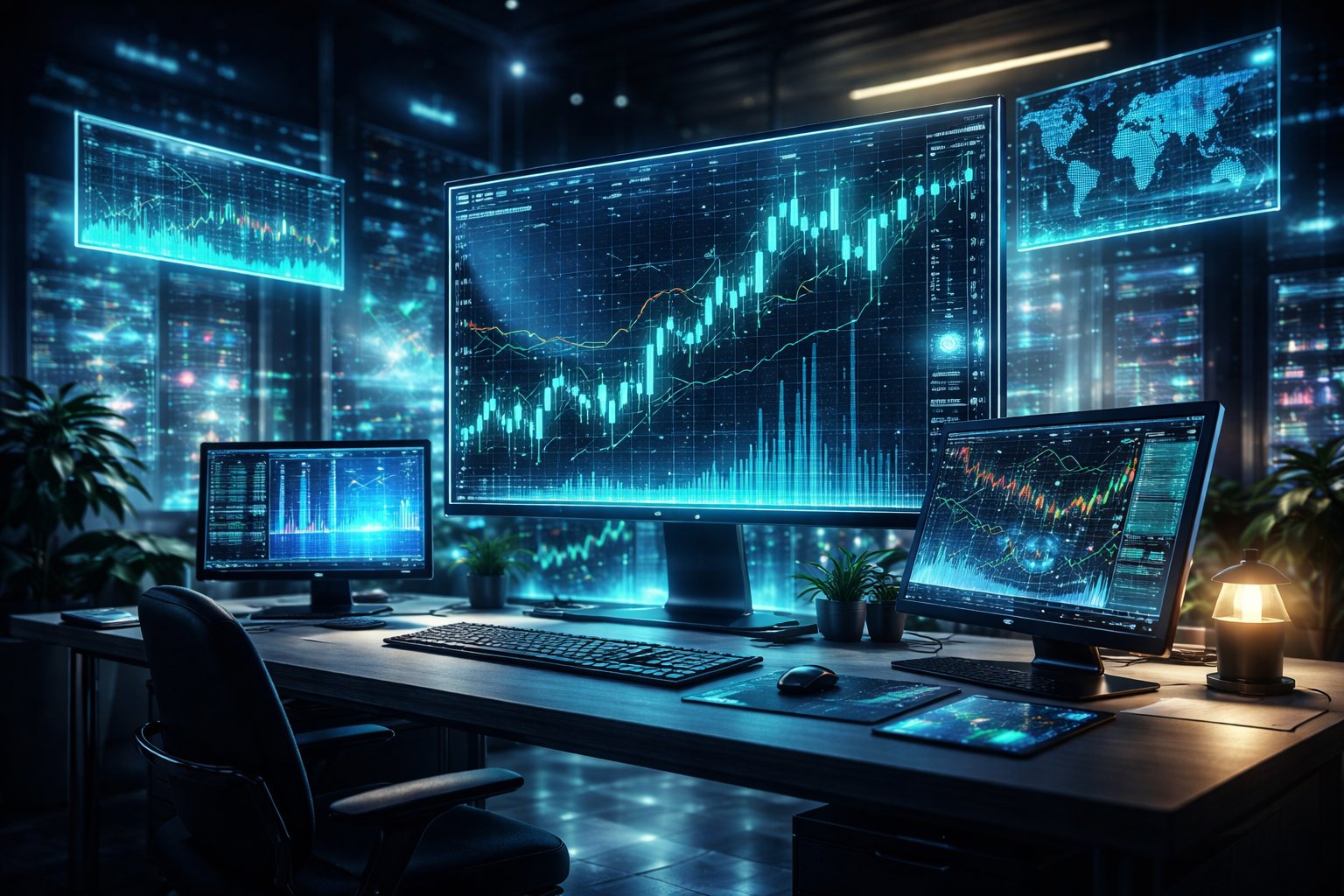
AI and Automation transforming stock trading in 2026 with machine learning systems
The synergy of Machine Learning and real-time data execution in the 2026 financial landscape.

Whether you are a retail trader sitting at home or a quant at a massive hedge fund, the playing field has leveled. We’ve shifted from "guessing" to "calculating." AI-driven systems now sift through petabytes of global data in milliseconds, identifying patterns that the human eye would miss in a lifetime.

"By stripping away the two biggest enemies of trading—human emotion and fatigue—automation has turned the chaotic stock market into a streamlined, data-backed engine of growth."

At Xenors, we believe mastering this new language of wealth starts with the basics. If you're new here, check out our guide on The Fundamentals of Machine Learning in Finance . Staying updated on global trends via the MIT Technology Review is also crucial for long-term success.

2. The Unstoppable Rise of Algorithmic Trading

Algorithmic Trading (Algo Trading) is the heartbeat of 2026's market. Over 80% of trades in the US and EU are now executed by code. These "silent workers" follow strict rules: buying at support, selling at resistance, and managing risk without a second thought.

Key Advantages:

  • Speed: Executions in milliseconds, outperforming any human.
  • Precision: Zero errors in order sizing or entry/exit levels.
  • Backtesting: Testing strategies on historical data via QuantConnect before going live.
Algorithmic trading dashboard showing real-time automated stock execution in 2026
Modern dashboards prioritize algorithmic execution and live data streams.
Developer Note: Learn how to build your own system with our Python Trading Bot using 5paisa API tutorial.

3. Sentiment Analysis: The Social Media Pulse

In 2026, a single viral post can move billions. AI now uses Natural Language Processing (NLP) to scan news from Reuters and social sentiment from platforms like X (Twitter) and Reddit.

This "Social Listening" allows traders to spot a trend before it hits the price charts. It's about understanding the "why" behind the "what."

AI sentiment analysis tracking social media impact on stock market trends
Correlating social media hype with real-time stock price fluctuations.

4. Intelligent Risk Management

AI doesn't just make money; it protects it. Dynamic stop-losses and automated portfolio rebalancing are now standard. Using Python Data Science , systems calculate the "Value at Risk" (VaR) instantly.

For institutional standards, many look toward Nasdaq's risk protocols . At Xenors, we emphasize the importance of preparing for Black Swan events .

AI-based risk management dashboard with automated stop loss and portfolio protection
AI adjusting protective layers based on market volatility index (VIX).

5. Democratizing Finance: AI for Everyone

You no longer need a million dollars to use AI. Platforms like TradingView and Zerodha have integrated AI indicators for everyone.

Whether you're exploring Machine Learning Projects or just starting with SQLite for Trading Data , the tools are now at your fingertips.

Retail trader using AI tools on mobile trading setup in 2026
The retail trading desk in 2026 is powered by mobile AI integrations.

6. Beyond 2026: Quantum & Neural Trading

The future is Quantum. As IBM Quantum and Google Quantum AI progress, we expect "Neural Trading" where AI learns and evolves its own strategy every second.

Stay tuned to Web Development Trends and Blockchain Finance for more updates.

Final Thoughts: AI won't replace traders, but traders who use AI will replace those who don't. Start your journey today!

Frequently Asked Questions (FAQs)

What is AI in stock trading?

AI in stock trading refers to the use of machine learning algorithms and data analysis tools to automate trading decisions, identify patterns, and execute trades with speed and accuracy.

How does algorithmic trading work?

Algorithmic trading uses predefined rules based on price, volume, and timing to execute trades automatically without human intervention.

Is AI trading better than manual trading?

AI trading is generally faster, more accurate, and emotion-free compared to manual trading, making it more efficient in volatile markets.

Can beginners use AI trading tools?

Yes, many platforms provide beginner-friendly AI tools that require minimal technical knowledge to start trading.

What are the risks of AI in trading?

AI trading risks include overfitting models, technical failures, and reliance on incorrect data inputs.

What is sentiment analysis in stock trading?

Sentiment analysis uses AI to analyze news and social media data to determine market sentiment and predict price movements.

Which platforms offer AI trading features?

Platforms like TradingView and Zerodha provide AI-based indicators and tools for traders.

What is backtesting in trading?

Backtesting is the process of testing a trading strategy using historical data to evaluate its performance before real trading.

How fast is AI trading?

AI trading systems can execute trades in milliseconds, significantly faster than human traders.

What is high-frequency trading (HFT)?

HFT is a type of algorithmic trading that uses powerful computers to execute a large number of orders at extremely high speeds.

Can AI predict stock market trends?

AI can identify patterns and probabilities but cannot guarantee accurate predictions due to market uncertainty.

Is AI trading legal?

Yes, AI trading is legal in most countries, but it must comply with financial regulations and exchange rules.

How does AI manage risk in trading?

AI uses techniques like stop-loss automation, portfolio diversification, and volatility analysis to manage risk effectively.

What is a trading bot?

A trading bot is a software program that uses AI or predefined rules to automatically execute trades in financial markets.

Do hedge funds use AI trading?

Yes, most modern hedge funds use AI and algorithmic trading systems to gain a competitive edge.

What is the future of AI in stock trading?

The future includes advanced neural networks, quantum computing, and fully autonomous trading systems.

Can AI replace human traders?

AI can automate many tasks, but human judgment and strategy are still important in complex market scenarios.

What skills are needed for AI trading?

Basic knowledge of programming, data analysis, and financial markets is helpful for AI trading.

What is machine learning in finance?

Machine learning in finance involves using algorithms to analyze financial data and improve decision-making processes.

How can I start AI trading?

You can start by learning basics, using platforms like TradingView, and experimenting with demo trading accounts.

Is AI trading profitable?

AI trading can be profitable if strategies are well-designed, tested, and properly managed.
Explore This Topic Further