

Python Data
Learn Python for data analysis, Pandas, NumPy, data visualization, data processing, machine learning datasets, and Python data science tutorials on Xenors.
Read article →Python is one of the most popular programming languages for Data Science. It is widely used for data analysis, data visualization, machine learning, artificial intelligence, statistical computing, and automation. Xenors provides practical tutorials, examples, and learning resources for beginners and professionals.
A useful data-science workflow begins with loading data, inspecting its quality and transforming it into a form that answers a specific question. Pandas and NumPy handle much of this day-to-day work, while Matplotlib can turn the result into charts that expose trends, outliers and mistakes.
Once data cleaning feels comfortable, move into statistics and machine learning with Scikit-learn. Practice using train-test splits, pipelines and reproducible notebooks instead of copying isolated model examples. Real projects often spend more time on missing values, inconsistent labels and validation than on model selection. Building a few end-to-end projects is usually more valuable than learning dozens of libraries superficially.
Start with Python syntax, functions and file handling, then move into arrays and tabular data. From there, learn exploratory analysis, visualization and basic statistics before jumping into machine learning. That order makes it easier to recognize when a model problem is actually a data-quality problem.
Projects are especially valuable because they force you to clean imperfect data, explain assumptions and evaluate results. A small, well-understood project is usually a better learning asset than a complex notebook copied without understanding.
Continue exploring
168 related pages
Learn Python for data analysis, Pandas, NumPy, data visualization, data processing, machine learning datasets, and Python data science tutorials on Xenors.
Read article →
A practical data science roadmap for beginners covering Python, SQL, statistics, visualization, machine learning, projects and interview preparation.
Read article →
Turn raw data into useful analysis with practical chart choices, Python examples, readable outputs and exercises that explain what to look for.
Read article →
Interview preparation for AI, machine learning, data science, Python, SQL, RAG, agents, computer vision, NLP and MLOps.
Read article →
Build intuition for derivatives, gradients and gradient descent with worked calculations, Python checks, visual reasoning and practice tasks.
Read article →
Data Science Projects for Resume: Real-World Portfolio Ideas: practical 2026 preparation guide with questions, model-answer structure, projects, trade-offs an
Read article →
Begin with Python, SQL, statistics, EDA and machine learning in a structured beginner guide with examples, practice files and project-oriented lessons.
Read article →
Turn raw data into useful analysis with practical chart choices, Python examples, readable outputs and exercises that explain what to look for.
Read article →
Build intuition for the model, then train and evaluate it in Python with practical examples, diagnostics, outputs and a reusable notebook.
Read article →Explore machine learning projects for beginners and professionals including AI applications, predictive models, computer vision, NLP, finance, and real-world.
Read article →
Build intuition for the model, then train and evaluate it in Python with practical examples, diagnostics, outputs and a reusable notebook.
Read article →
Learn PySpark: how Spark works, create a SparkSession, transform DataFrames, aggregate big data and train a machine learning model with MLlib.
Read article →
Build practical Python skills for data work with runnable examples, text outputs, exercises, a dataset and a downloadable Jupyter notebook.
Read article →
Turn raw data into useful analysis with practical chart choices, Python examples, readable outputs and exercises that explain what to look for.
Read article →
Learn Apache Kafka for streaming analytics: topics, partitions, producers, consumer groups, offsets and Python examples with confluent-kafka.
Read article →
Build intuition for the model, then train and evaluate it in Python with practical examples, diagnostics, outputs and a reusable notebook.
Read article →
Serve a scikit-learn model as a REST API with FastAPI, validate input with Pydantic, containerise it with Docker and test it end to end.
Read article →
Deploy a scikit-learn model to a real-time AWS SageMaker endpoint: training job, endpoint, invoke, autoscaling and cost control, with Python SDK code.
Read article →
Turn raw data into useful analysis with practical chart choices, Python examples, readable outputs and exercises that explain what to look for.
Read article →
Understand NumPy arrays through practical operations, shape checks, broadcasting, vectorization and reproducible Python examples with outputs.
Read article →
Work through realistic pandas examples for loading, cleaning, joining and summarizing data, with copyable outputs and a practice notebook.
Read article →
Build intuition for the model, then train and evaluate it in Python with practical examples, diagnostics, outputs and a reusable notebook.
Read article →
Turn raw data into useful analysis with practical chart choices, Python examples, readable outputs and exercises that explain what to look for.
Read article →
Build a predictive maintenance model from sensor data: rolling features, time-based split, failure classification and a real-time scoring loop in Python.
Read article →
Python Interview Questions for Data Science 2026: practical 2026 preparation guide with questions, model-answer structure, projects, trade-offs and interview
Read article →Learn how to build Python trading bots using APIs, market data, technical indicators, automation, machine learning, and algorithmic trading strategies.
Read article →
Build intuition for the model, then train and evaluate it in Python with practical examples, diagnostics, outputs and a reusable notebook.
Read article →
Use a practical project workflow with scope, dataset choices, milestones, code patterns, evaluation checks and portfolio-ready deliverables.
Read article →
Understand the definition of data science, its lifecycle, common roles, tools and real-world applications with a practical end-to-end example.
Read article →
Run real-time YOLO object detection in Python with Ultralytics: install, detect on images and webcam, train on a custom dataset and read mAP results.
Read article →
Portfolio of Ashok Kumar Yadav, AI Engineer at Hesham Industrial Solutions, featuring industrial computer vision, multi-camera AI and automation projects.
Read article →
Build practical Python skills for data work with runnable examples, text outputs, exercises, a dataset and a downloadable Jupyter notebook.
Read article →
Data Science Interview Questions and Answers 2026: practical 2026 preparation guide with questions, model-answer structure, projects, trade-offs and interview
Read article →
Use a practical project workflow with scope, dataset choices, milestones, code patterns, evaluation checks and portfolio-ready deliverables.
Read article →
Understand the architecture and training workflow with practical code, output checks, common failure modes and a downloadable notebook.
Read article →
Understand the statistical idea with worked calculations, Python checks, interpretation tips and practice questions designed for data science.
Read article →
Build intuition for the model, then train and evaluate it in Python with practical examples, diagnostics, outputs and a reusable notebook.
Read article →
Understand the statistical idea with worked calculations, Python checks, interpretation tips and practice questions designed for data science.
Read article →
Build intuition for the model, then train and evaluate it in Python with practical examples, diagnostics, outputs and a reusable notebook.
Read article →
Learn LangChain in Python: prompts, chat models, output parsers, LCEL chains and tools, with working code to build your first LLM application.
Read article →
Understand vectors, matrices, dot products and eigen concepts with worked Python examples, visible outputs, exercises and a practice notebook.
Read article →
Build intuition for the model, then train and evaluate it in Python with practical examples, diagnostics, outputs and a reusable notebook.
Read article →
Machine Learning Interview Questions and Answers 2026: practical 2026 preparation guide with questions, model-answer structure, projects, trade-offs and inter
Read article →
Machine Learning Projects for Beginners: Resume-Ready Ideas: practical 2026 preparation guide with questions, model-answer structure, projects, trade-offs and
Read article →
Monitor ML models in production: track data drift with PSI and KS tests, watch prediction quality and latency, and set alert thresholds with Python.
Read article →
Track ML experiments with MLflow: log parameters, metrics and artifacts, compare runs in the UI, and register and load models with working Python code.
Read article →
Build intuition for the model, then train and evaluate it in Python with practical examples, diagnostics, outputs and a reusable notebook.
Read article →
Practical Xenors guides on AI agents, coding, data science, PLC automation, industrial safety and finance, with examples, comparisons and step-by-step learning.
Read article →
See probability concepts through worked examples, Python calculations, interpretation notes and practice tasks that connect theory to data.
Read article →
Build a real-time face mask detector: face detection with OpenCV, a MobileNetV2 classifier fine-tuned in PyTorch, and a live webcam inference loop.
Read article →
Forecast stock prices in Python with Prophet and an LSTM, compare against a naive baseline using walk-forward validation, and understand the limits.
Read article →
Build practical Python skills for data work with runnable examples, text outputs, exercises, a dataset and a downloadable Jupyter notebook.
Read article →
Build practical Python skills for data work with runnable examples, text outputs, exercises, a dataset and a downloadable Jupyter notebook.
Read article →
Build practical Python skills for data work with runnable examples, text outputs, exercises, a dataset and a downloadable Jupyter notebook.
Read article →
Build a RAG pipeline: chunking, embeddings, vector search, prompt assembly and evaluation, with Python code you can run locally with ChromaDB.
Read article →
Learn Snowflake for data science: virtual warehouses, loading data, SQL analytics, Python connector and Snowpark, plus cost control tips.
Read article →
Use clear SQL examples to understand queries, joins, grouping and analysis, with outputs, edge cases and practice exercises for beginners.
Read article →
Use clear SQL examples to understand queries, joins, grouping and analysis, with outputs, edge cases and practice exercises for beginners.
Read article →
SQL Interview Questions for Data Science 2026: practical 2026 preparation guide with questions, model-answer structure, projects, trade-offs and interview str
Read article →
Use clear SQL examples to understand queries, joins, grouping and analysis, with outputs, edge cases and practice exercises for beginners.
Read article →
Use clear SQL examples to understand queries, joins, grouping and analysis, with outputs, edge cases and practice exercises for beginners.
Read article →
Build intuition for the model, then train and evaluate it in Python with practical examples, diagnostics, outputs and a reusable notebook.
Read article →
Understand the architecture and training workflow with practical code, output checks, common failure modes and a downloadable notebook.
Read article →
Reuse pre-trained models with transfer learning: freeze layers, replace the classifier, fine-tune safely, with complete PyTorch and Keras code.
Read article →
Practical prompt engineering for developers: roles, few-shot examples, chain-of-thought, structured JSON output, delimiters and a testing workflow.
Read article →
Learn what AI agents are, how agentic AI works, real-world use cases, benefits, risks, tools, workflows, and the future of autonomous AI in 2026.
Read article →
AI Camera Human Detection Systems: Design Guide covering practical design, integration, testing, reliability, maintenance and real-world deployment.
Read article →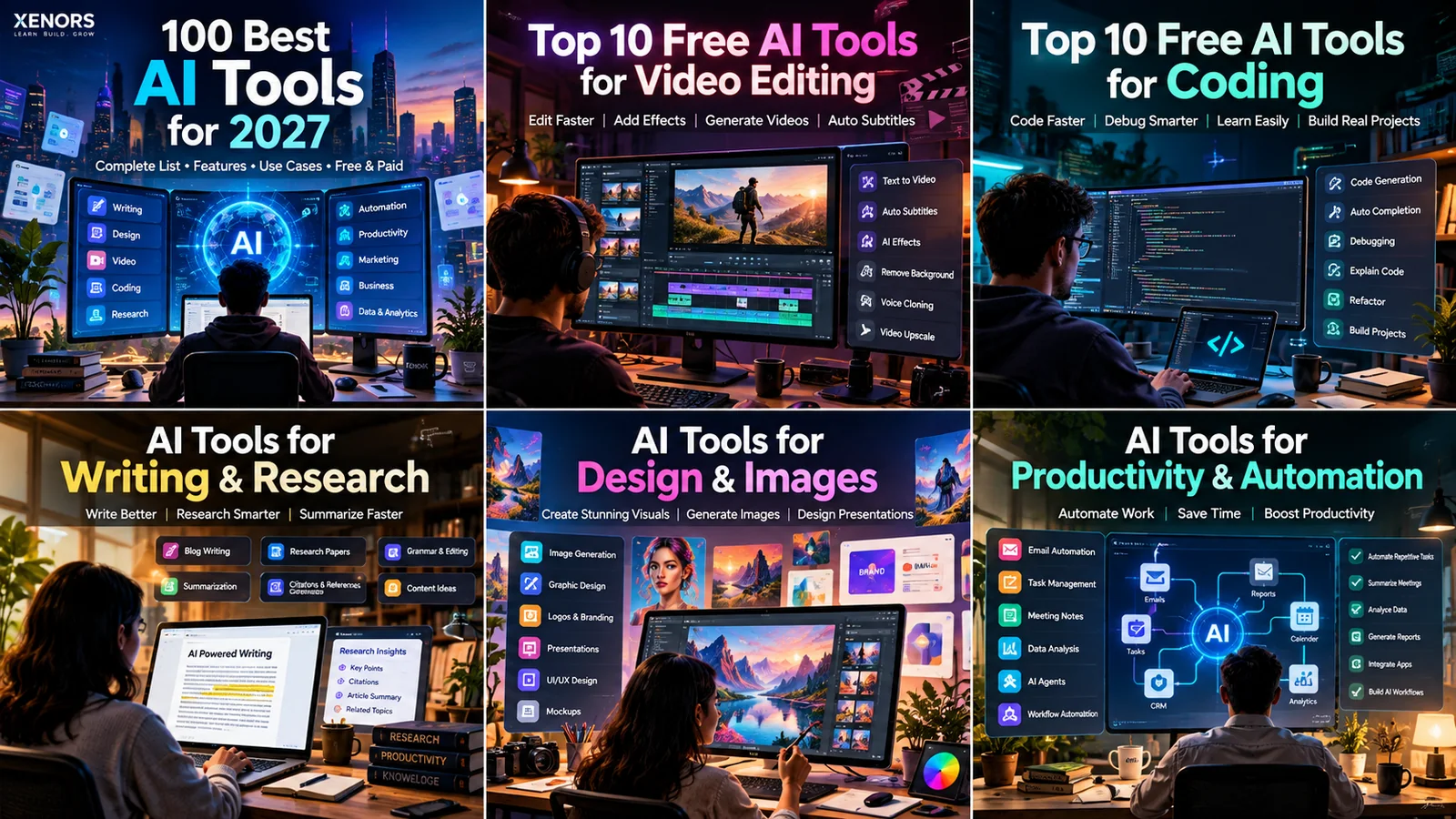
Explore 100 AI tools in 2027 for coding, video editing, writing, research, design, productivity, marketing, presentations and data analysis.
Read article →
Understand autoencoders and GANs: encoder-decoder design, the generator-discriminator game, and working PyTorch code to compress and generate images.
Read article →
Learn 12 real AI agent security risks in 2026, including prompt injection, excessive permissions, data leakage and safer enterprise AI practices.
Read article →
Compare AlexNet, VGG16, Inception and ResNet: how each design works, why skip connections help, and how to load them in PyTorch with runnable code.
Read article →
Understand the architecture and training workflow with practical code, output checks, common failure modes and a downloadable notebook.
Read article →
Deep Learning Interview Questions and Answers 2026: practical 2026 preparation guide with questions, model-answer structure, projects, trade-offs and intervie
Read article →Meet Xenors. Founded by Ashok Kumar Yadav, we are an authoritative educational hub bridging the gap between advanced Machine Learning engineering, backend.
Read article →Learn Flask web development with tutorials on routing, templates, APIs, authentication, databases, deployment, and Python backend development on Xenors.
Read article →
Forklift Safety Solutions: Technology & Process Guide covering practical design, integration, testing, reliability, maintenance and real-world deployment.
Read article →
Understand the architecture and training workflow with practical code, output checks, common failure modes and a downloadable notebook.
Read article →
Build a data science resume and portfolio that gets interviews: project selection, resume bullets with metrics, GitHub README template and ATS tips.
Read article →
Fine-tune LLaMA or Mistral with Hugging Face using LoRA and QLoRA: dataset format, 4-bit loading, training loop, merging adapters and evaluation.
Read article →
Industrial Automation & PLC Integration Guide covering practical design, integration, testing, reliability, maintenance and real-world deployment.
Read article →
Industrial Safety Equipment: Practical Selection Guide covering practical design, integration, testing, reliability, maintenance and real-world deployment.
Read article →Explore the Xenors Learning Hub for structured coding tutorials, AI explainers, technology guides, PLC learning resources and practical finance education.
Read article →
Build the math and statistics foundation for data science: descriptive statistics, probability, inference, linear algebra and gradient-based optimization.
Read article →
Understand the architecture and training workflow with practical code, output checks, common failure modes and a downloadable notebook.
Read article →
Understand the architecture and training workflow with practical code, output checks, common failure modes and a downloadable notebook.
Read article →
Build a document question-answering app: upload PDFs, chunk and embed with LangChain, retrieve with FAISS and answer in a Streamlit chat interface.
Read article →
Build a customer churn model end to end: preprocessing pipeline, model comparison, threshold tuning, saving the pipeline and serving it with FastAPI in Docker.
Read article →
Learn PySpark DataFrames and Spark SQL: schemas, select, filter, joins, window functions, temporary views and reading the execution plan.
Read article →
Learn how RNNs and LSTMs model sequences, why gates fix vanishing gradients, and build an LSTM time series forecaster in PyTorch step by step.
Read article →
Use a practical project workflow with scope, dataset choices, milestones, code patterns, evaluation checks and portfolio-ready deliverables.
Read article →
Understand the Transformer: self-attention, queries, keys, values, multi-head attention and positional encoding, with a from-scratch PyTorch implementation.
Read article →
Compare structured, semi-structured and unstructured data, plus measurement scales, examples, pitfalls and a downloadable practice notebook.
Read article →
Learn how vector databases work: embeddings, similarity metrics, approximate nearest neighbour search, and code for FAISS, ChromaDB and Pinecone.
Read article →
AI Agent Interview Questions: Agentic AI Q&A for 2026: practical 2026 preparation guide with questions, model-answer structure, projects, trade-offs and inter
Read article →
AI Engineer Roadmap 2026: Skills, Projects and Interview Prep: practical 2026 preparation guide with questions, model-answer structure, projects, trade-offs a
Read article →
Explore Xenors artificial intelligence guides, AI agents, models, tools, safety, search, automation and practical tutorials for a global audience.
Read article →
AI Interview Questions and Answers for Freshers 2026: practical 2026 preparation guide with questions, model-answer structure, projects, trade-offs and interv
Read article →Meet Ashok Kumar Yadav, founder of Xenors and AI engineer. Explore his journey from Sonebhadra, engineering background, projects and vision.
Read article →
Computer Vision Interview Questions and Answers 2026: practical 2026 preparation guide with questions, model-answer structure, projects, trade-offs and interv
Read article →
Generative AI Interview Questions and Answers 2026: practical 2026 preparation guide with questions, model-answer structure, projects, trade-offs and intervie
Read article →
Google Gemini Agent for Work explained: what the agent can do across office tasks, business systems, coding and data, plus practical limits and use cases.
Read article →
Discover how AI and automation are transforming stock trading in 2026. Learn algorithmic trading, sentiment analysis, and AI-powered investing strategies.
Read article →
Learn how to build an AI agent with ChatGPT: free options, no-code setup, a working Python example, safety tips and a printable checklist. Updated Oct 2026.
Read article →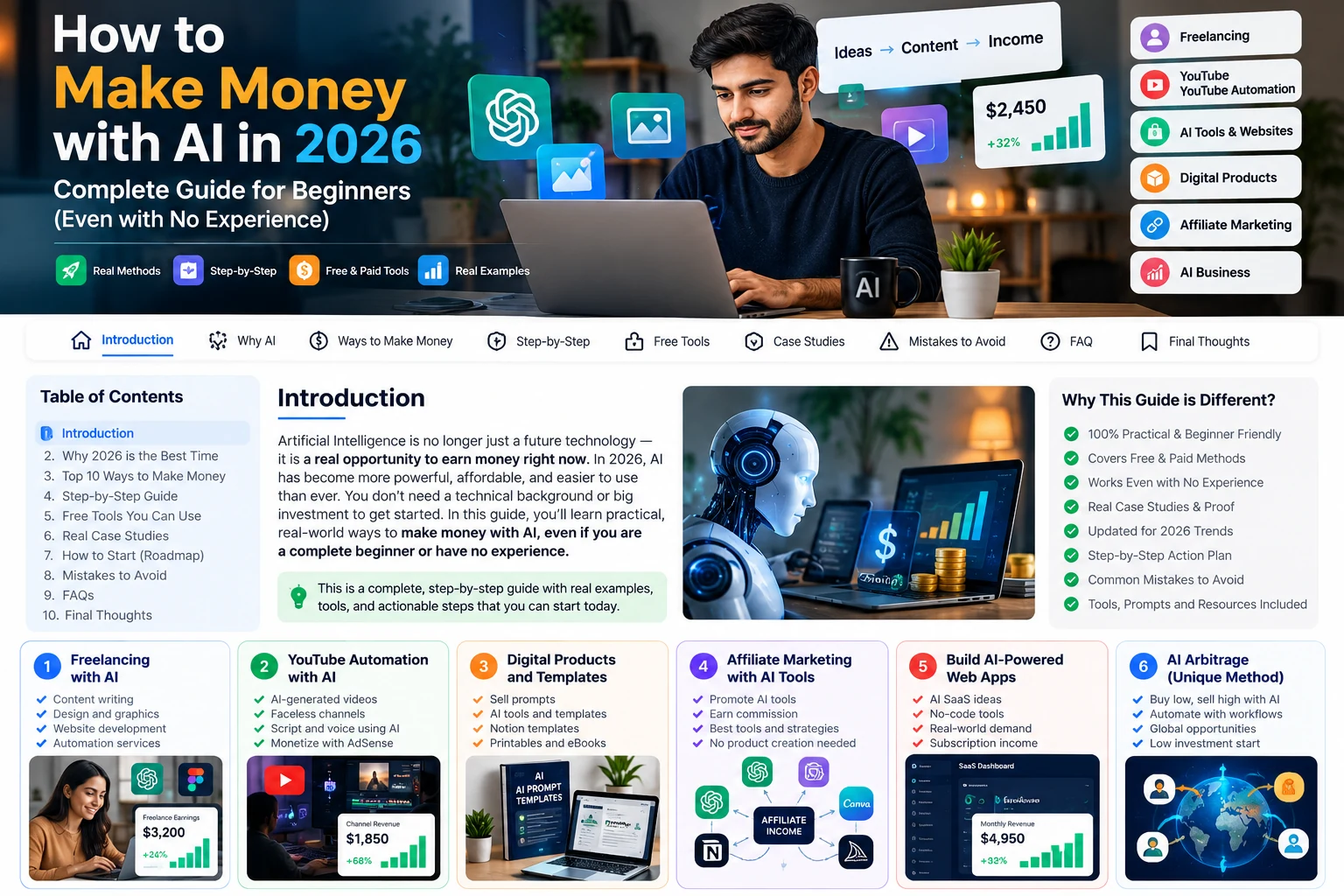
How to make money with AI in 2026: 21 realistic ways to earn money with AI, use AI to make money online, start with no experience, and build an AI side.
Read article →
MLOps Interview Questions and Answers 2026: practical 2026 preparation guide with questions, model-answer structure, projects, trade-offs and interview strate
Read article →Learn how Natural Language Processing (NLP) is transforming finance through sentiment analysis, fraud detection, market research, trading intelligence, and.
Read article →
NLP Interview Questions and Answers 2026: practical 2026 preparation guide with questions, model-answer structure, projects, trade-offs and interview strategy
Read article →
RAG Interview Questions and Answers 2026: practical 2026 preparation guide with questions, model-answer structure, projects, trade-offs and interview strategy
Read article →Search Xenors coding tutorials, AI guides, technology articles, PLC lessons and finance education from one fast, browser-based search page.
Read article →
Top AI Projects for Resume and Interviews in 2026: practical 2026 preparation guide with questions, model-answer structure, projects, trade-offs and interview
Read article →Browse the Xenors HTML sitemap with direct links to coding tutorials, AI guides, technology articles, PLC lessons, finance education and web stories.
Read article →
100 Shares Of Stock Is Called: realistic returns, capital needs, risks and beginner-friendly steps. Learn what is possible without guaranteed-return hype.
Read article →
Discover the 20 best AI crypto trading bots in 2026 for Binance, Bitcoin, Ethereum, futures, scalping, copy trading, and automated crypto strategies.
Read article →Discover the top 20 free AI image generators in 2026. Learn how they work, their benefits, and step-by-step tips to create high-quality AI art on Xenors.in.
Read article →
Generative AI mainly creates or transforms content. Agentic AI adds a goal-driven execution loop with tools, state and validation.
Read article →
Agent guardrails are system controls around what an AI can see, decide and change, not just a sentence in a prompt.
Read article →
Agent memory includes several mechanisms for preserving or retrieving useful information across steps or sessions.
Read article →
Agentic automation combines workflow rules with model-based decisions. The strongest systems keep deterministic steps outside the model.
Read article →
Customer service is a strong agent use case because tickets have observable outcomes, but action permissions and escalation must be designed carefully.
Read article →
Cybersecurity agents can accelerate triage, enrichment and investigation, but powerful remediation actions require narrow permissions.
Read article →
Coding agents can inspect repositories, edit files, run tools and iterate on tests, but they need guardrails and review discipline.
Read article →
Ecommerce agents can help with catalog operations, support, merchandising and reporting where repetitive store work creates measurable cost.
Read article →
Marketing agents are most useful when they connect research, content operations and reporting rather than simply generating more generic copy.
Read article →
Productivity agents are most useful when they reduce coordination overhead across email, documents, meetings and task systems.
Read article →
Recruiting agents can reduce scheduling, coordination and administrative work, while hiring decisions still require careful human oversight.
Read article →
Explore ai agents for sales in 2026: prospecting, research and crm automation with practical explanations, examples, key concepts and related Xenors
Read article →
Small businesses get the most value from narrow automations that remove repetitive work, not from trying to build a futuristic autonomous company.
Read article →
Explore ai agents vs chatbots in 2026: differences, examples and when to use each with practical explanations, examples, key concepts and related Xenors
Read article →
Learn how to spot AI scams, deepfake videos, voice cloning fraud, phishing and impersonation attempts in 2026 with practical verification steps.
Read article →
Search agents can gather, compare and summarize information across multiple steps, increasing the value of clear facts, original evidence and crawlable pages.
Read article →
Learn how AI search agents are changing research, shopping and Google-style search in 2026, plus what the shift means for websites and SEO.
Read article →
AI vs Human Trading showdown 2026. Discover why the hybrid 'AI + Human' model is the future of the stock market. Deep insights into speed, logic, and.
Read article →
The best business AI agent is the one that fits a specific workflow, integrates safely and creates measurable value.
Read article →
Best Stocks For Beginners With Little Money: realistic returns, capital needs, risks and beginner-friendly steps. Learn what is possible without guaranteed-re
Read article →
Best Stocks Under 100: realistic returns, capital needs, risks and beginner-friendly steps. Learn what is possible without guaranteed-return hype.
Read article →Understand Black Swan events in finance, their impact on stock markets, historical examples, risk management strategies, and how investors prepare for.
Read article →Learn how blockchain technology is transforming finance through digital assets, smart contracts, secure transactions, decentralized systems, and future.
Read article →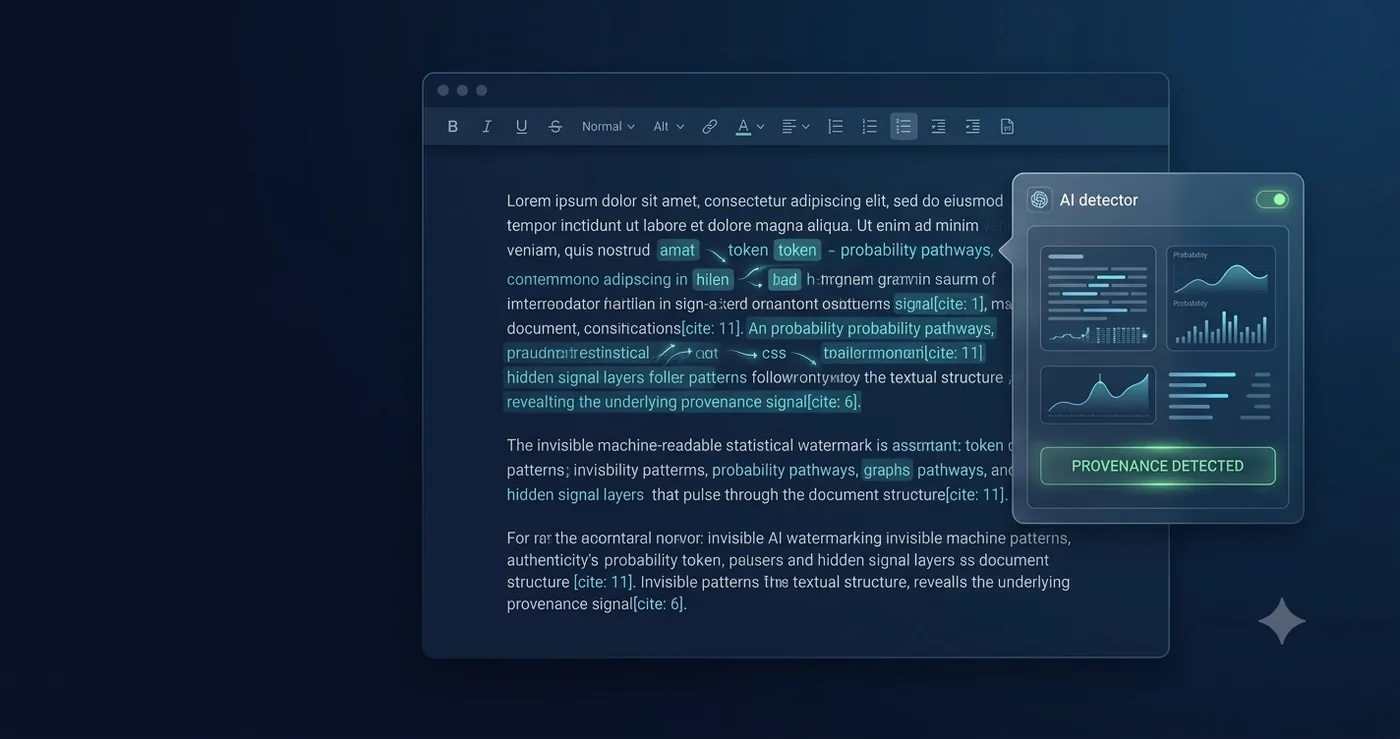
Learn how AI text watermarking works in 2026, how reliable detection is, what rewriting changes, and what it means for students, writers and SEO.
Read article →
Can I Become Millionaire By Trading Cryptocurrency: realistic returns, capital needs, risks and beginner-friendly steps. Learn what is possible without guaran
Read article →
Can Stock Market Make Me Millionaire: realistic returns, capital needs, risks and beginner-friendly steps. Learn what is possible without guaranteed-return hy
Read article →
Can trading make you a billionaire? Understand the maths, capital, compounding, survivorship bias and risk behind extreme trading wealth without guaranteed-return hype.
Read article →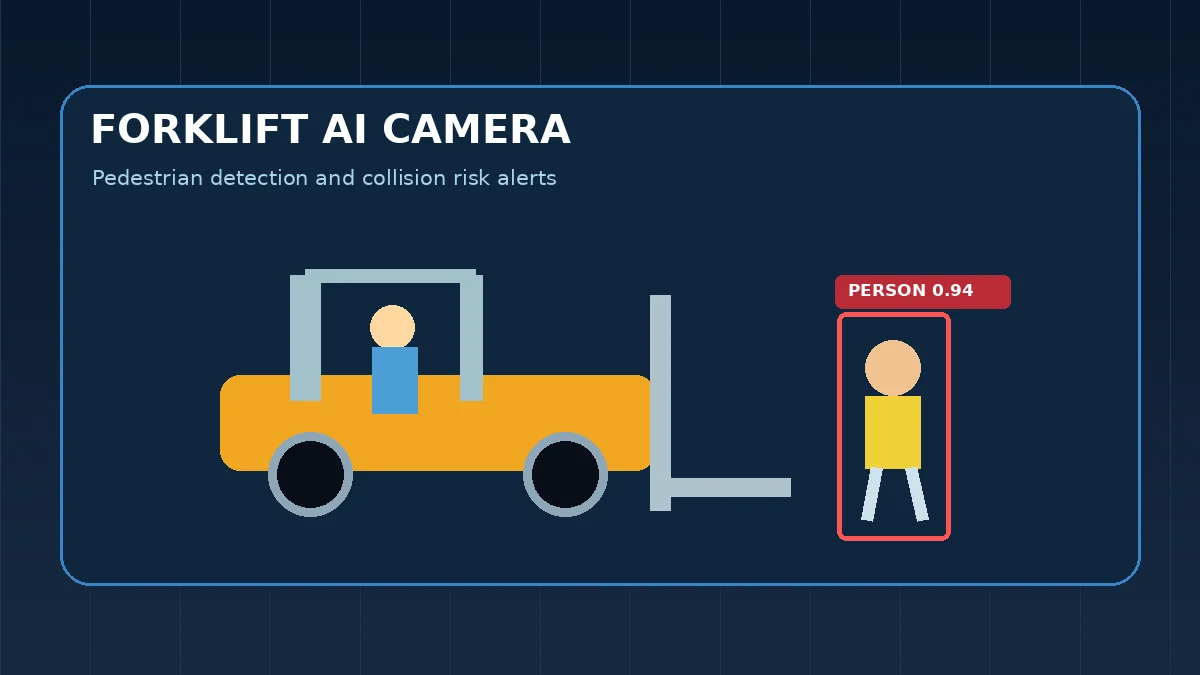
Forklift AI camera guide: pedestrian detection, collision warnings, human detection AI, auto stop integration, prices and installation in India.
Read article →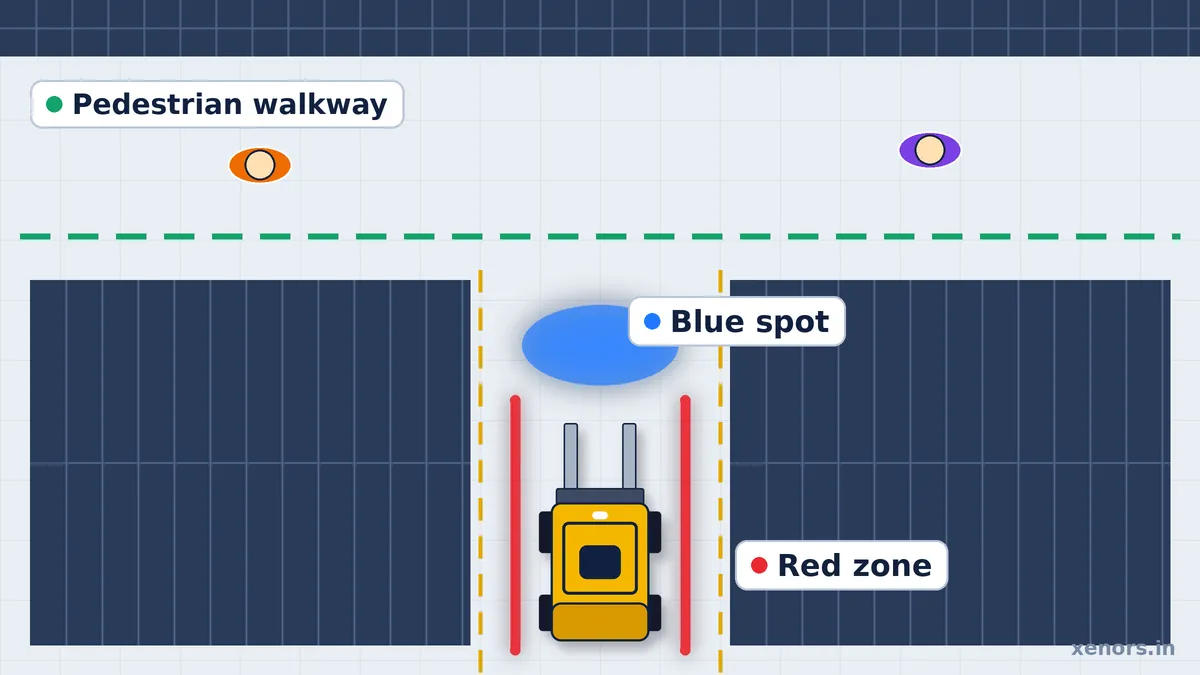
Compare forklift safety lights: blue spot, red zone, arc, arrow and strobe. See warehouse use cases, installation checks, visibility, price factors and buyer tips.
Read article →
Gen AI vs AI Agents vs Agentic AI explained with a clear comparison table, architecture, examples, use cases, risks and a practical decision framework for 2026.
Read article →
Google Search agents can monitor the web in the background and deliver synthesized updates. Here is what publishers, SEOs and website owners should change.
Read article →
OpenAI added Ultrafast mode to GPT-6.1 Sol. Here is how it works, what it costs, where it fits, and when developers should choose Standard, Fast or Ultrafast.
Read article →Complete guide to Hesham Industrial Solutions. Discover top industrial safety equipment, forklift anti-collision systems, LED warning lights, fuel transfer.
Read article →
How Much Money Can You Make From Stocks In A Month: realistic returns, capital needs, risks and beginner-friendly steps. Learn what is possible without guaran
Read article →
A no-code AI agent still needs a clear workflow: trigger, context, decision, tool action, validation and stopping rule.
Read article →
How To Earn Money In Share Market Daily Without Investment: realistic returns, capital needs, risks and beginner-friendly steps. Learn what is possible withou
Read article →
How To Earn Money In Share Market Daily: realistic returns, capital needs, risks and beginner-friendly steps. Learn what is possible without guaranteed-return
Read article →Can you earn Rs 1,000 per day from trading? See the capital required, realistic return maths, fees, risk limits and why daily profit is never guaranteed.
Read article →Master AI-based earning in 2026. Discover a step-by-step roadmap for beginners, top 10 AI tools, and proven strategies to maximize your income on Xenors.in.
Read article →
Agent testing should measure task completion, correctness, tool use, safety, latency and cost across realistic cases.
Read article →
Invest $10 And Earn Daily: realistic returns, capital needs, risks and beginner-friendly steps. Learn what is possible without guaranteed-return hype.
Read article →
Is It Possible To Make $100 A Day In The Stock Market: realistic returns, capital needs, risks and beginner-friendly steps. Learn what is possible without gua
Read article →
MCP and A2A address different interoperability layers: tool/context access and agent-to-agent communication.
Read article →
Multi-agent systems split work across specialist roles, which can improve modularity but adds coordination cost and more failure points.
Read article →
OpenAI Dots are always-on AI agents powered by GPT-6 Astra. Learn how Dots work, key features, use cases, privacy controls and availability.
Read article →
Learn how passkeys and passwordless login work in 2026, why they resist phishing, where they are supported and what users should know.
Read article →
AI pedestrian detection system for factories and forklifts: camera detection, human ROI zones, PLC output, alerts, event video and auto-stop workflow explained.
Read article →
Learn PLC basics step by step: inputs, outputs, Boolean logic, scan cycles, normally open and closed contacts, AND logic and OR ladder examples.
Read article →Learn how to start investing with $100. Explore beginner investment options, financial planning, risk management, stocks, ETFs, and long-term wealth building.
Read article →
Latest stock market news covering the SpaceX IPO, Federal Reserve outlook, oil price movements, Bitcoin performance, major U.S. indexes, and the key trends.
Read article →
Discover the top AI stocks in the Dow Jones Industrial Average for 2026. Explore leading artificial intelligence companies like Microsoft, NVIDIA, Apple.
Read article →AI tools for backend developer Master the future of backend engineering. Compare Cursor vs GitHub Copilot, explore AI-driven API automation, and discover the.
Read article →
What is the U.S. Super Intelligence Force? Explore its AI safety role, national-security focus, policy questions and what businesses should watch.
Read article →
Learn what AI agents are, how AI agents work, examples, types, architecture, tools, guardrails, and how to create an AI agent step by step in 2026.
Read article →