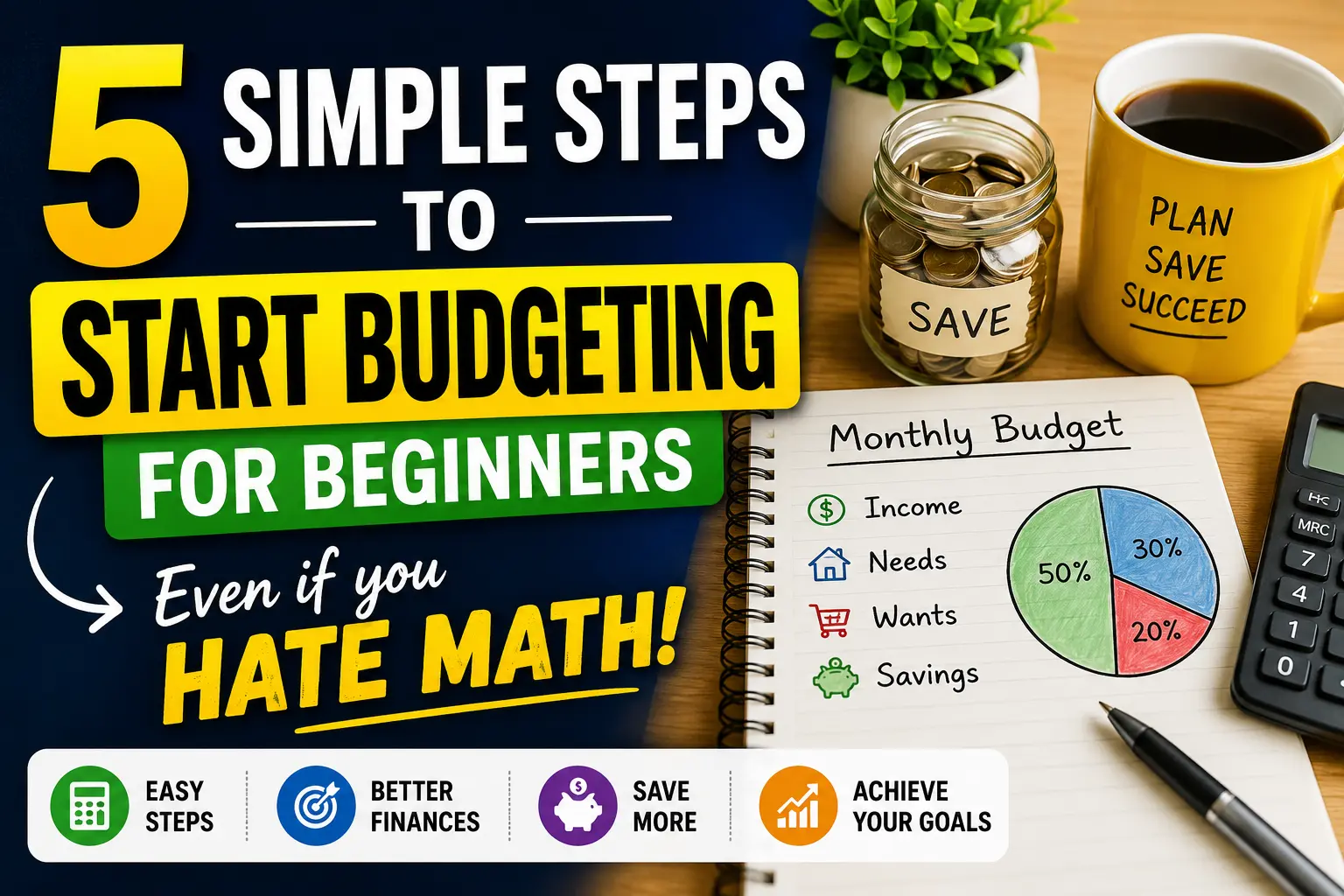
5 Simple Steps to Start Budgeting for Beginners in 2026


Whenever someone hears the word budget, the first thought that comes to mind is restrictions, calculations, and saying goodbye to fun. In reality, budgeting is exactly the opposite.
A good budget doesn't stop you from spending money. Instead, it helps you spend intentionally. You decide where every dollar or rupee should go before it disappears into random online shopping, food delivery apps, subscriptions, or impulse purchases.
Whether you're earning your very first salary or trying to save for a house, learning how to budget is one of the most valuable financial skills you can ever develop.
"A budget tells your money where to go instead of wondering where it went."
The best part? You don't need to be good at mathematics. You don't even need Excel. All you need is a notebook, your bank statement, and 20 minutes every month.
People who budget regularly generally make better financial decisions because they know exactly where their income goes every month.
Your budget starts with one number—your actual take-home income.
If you're employed, don't use your annual CTC or gross salary. Instead, use the amount that actually reaches your bank account after taxes, insurance, PF, or other deductions.
If you're a freelancer or business owner whose income changes every month, calculate the average income from the previous six months. This gives you a realistic baseline.
| Income Source | Monthly Amount |
|---|---|
| Salary | $2,500 |
| Freelance Work | $400 |
| Investment Income | $100 |
| Total | $3,000 |

Most people believe they know exactly where their money goes every month. But when they actually check their bank statement, they are often surprised.
A ₹99 subscription here, ₹250 coffee there, ₹600 food delivery, ₹500 online shopping... individually these amounts seem small, but together they can consume thousands every month.
| Fixed Expenses | Variable Expenses |
|---|---|
| House Rent | Shopping |
| Loan EMI | Entertainment |
| Insurance | Travel |
| Electricity Bill | Dining Out |
| Internet | Online Orders |

The 50/30/20 rule is one of the simplest budgeting frameworks used around the world.
| Category | Percentage | Examples |
|---|---|---|
| Needs | 50% | Rent, Groceries, Bills, Medicine |
| Wants | 30% | Movies, Shopping, Trips, Restaurants |
| Savings | 20% | Emergency Fund, SIP, Investments |
If your monthly income is $3000
Don't worry if your percentages aren't perfect in the beginning. The goal is progress, not perfection.

Different people prefer different budgeting styles.
Simply write down every income and expense in a notebook.
Perfect for professionals who enjoy organizing data.
Expense tracking apps automatically categorize spending and generate reports.
Withdraw cash for shopping or entertainment and keep it inside envelopes. Once the envelope is empty, stop spending until next month.

Your first budget will never be perfect.
Every month, spend just 15 minutes reviewing your income and expenses.
Rahul earns ₹50,000 every month.
| Category | Amount |
|---|---|
| Rent & Bills | ₹18,000 |
| Food | ₹7,000 |
| Travel | ₹3,000 |
| Entertainment | ₹5,000 |
| Investments | ₹10,000 |
| Emergency Fund | ₹7,000 |
Within one year, Rahul built an emergency fund and also started investing consistently without sacrificing his lifestyle.

| Task | Status |
|---|---|
| Calculate Monthly Income | ☐ |
| Track Expenses | ☐ |
| Pay Bills | ☐ |
| Transfer Money to Savings | ☐ |
| Review Spending | ☐ |
| Plan Next Month | ☐ |
No. A notebook or a free budgeting app is enough for most people.
Try saving at least 20% of your income. If that's not possible, start with 5–10% and increase it gradually.
Build a small emergency fund first, then focus on paying high-interest debt while continuing to save consistently.
No. High-income earners also need a budget because higher income often leads to higher spending.
At least once every month. A 15-minute review can help you stay on track.
Budgeting isn't about limiting your life—it's about creating financial freedom. By understanding your income, tracking expenses, following a simple budgeting method, and reviewing your progress every month, you can reduce financial stress and achieve your long-term goals.
Remember, the perfect budget doesn't exist. The best budget is the one you can actually follow consistently.
5 Simple Steps to Start Budgeting for Beginners in 2026

Stock Market Today: SpaceX IPO, Bitcoin & Wall Street Trends

Top AI Stocks in Dow Jones to Watch in 2026

Can ChatGPT Predict Crypto Prices? Real AI Test in 2026

Top Crypto Coins To Watch in 2026 For Next Bull Run

Best AI Tools for Stock Market Analysis in 2026