
Learn CNN filters, feature maps, pooling, receptive fields, transfer learning and practical image classification workflows. Use the dedicated Convolutional Neural Networks (CNN) for Computer Vision dataset and notebook to reproduce the lesson rather than reading it passively. This page targets the practical intent behind convolutional models, not repetition of the phrase itself.
Editorial note: Publication metadata for Convolutional Neural Networks (CNN) for Computer Vision is intentionally unset until this URL is actually released; the lesson already includes its own examples, CSV and notebook.
Understand the computation behind Convolutional Neural Networks (CNN) for Computer Vision
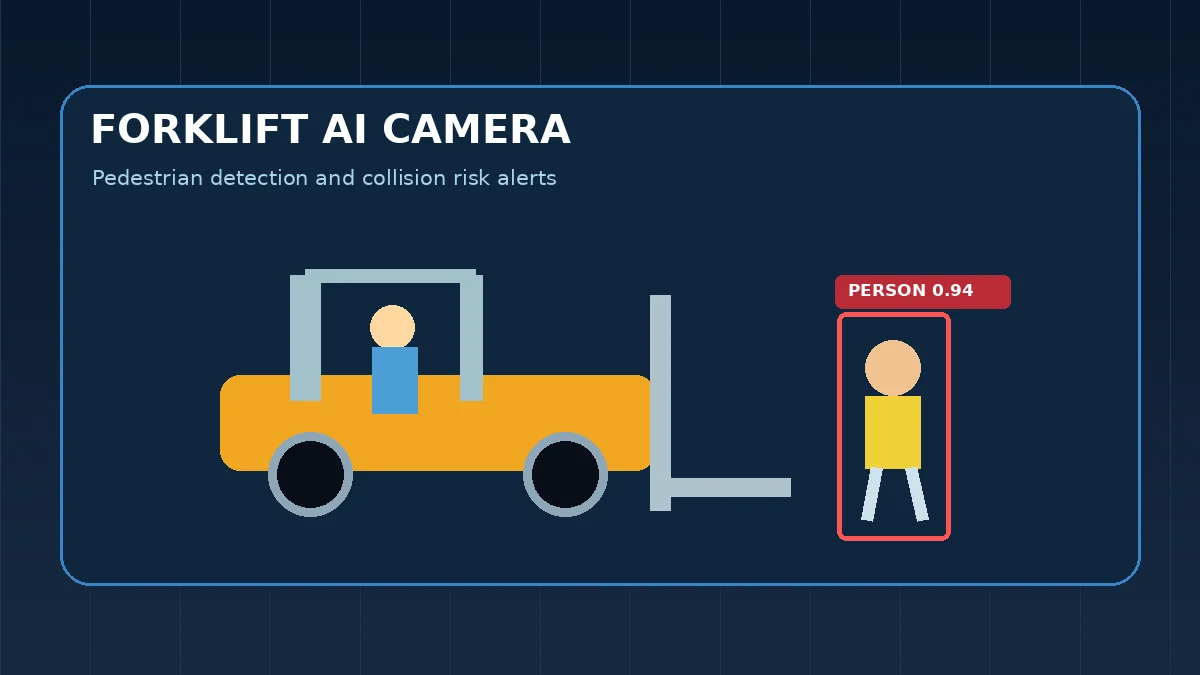
For PPE detection, a pretrained vision backbone can learn useful visual features before being fine-tuned on site-specific helmet or vest examples captured under the actual camera angles.
- Convolutional layers reuse small filters across an image, which reduces parameters and captures local visual patterns.
- Pooling or strided convolutions reduce spatial resolution while later layers combine local features into larger receptive fields.
- Data augmentation can improve robustness by exposing the model to plausible visual variation.
- Confusion matrices and class-specific examples are essential because aggregate accuracy can hide systematic visual failure modes.
Check shapes and training signals with a tiny model
For Convolutional Neural Networks (CNN) for Computer Vision, predict one visible result before each snippet runs—a row count, shape, statistic, ranking or error pattern—then compare it with the printed checkpoint.
# Convolutional Neural Networks (CNN) for Computer Vision · example 1
from tensorflow import keras
model = keras.Sequential([
    keras.layers.Conv2D(16, 3, activation='relu', input_shape=(64,64,3)),
    keras.layers.MaxPooling2D(),
    keras.layers.Conv2D(32, 3, activation='relu'),
    keras.layers.GlobalAveragePooling2D(),
    keras.layers.Dense(2, activation='softmax')
])Convolutional Neural Networks (CNN) for Computer Vision checkpoint 1: Run the cell and inspect the printed values before changing anything.
# Convolutional Neural Networks (CNN) for Computer Vision · example 2
import numpy as np
X = np.random.default_rng(42).normal(size=(32, 8)).astype('float32')
y = (X[:,0] + X[:,1] > 0).astype('float32')
print('X:', X.shape, 'y:', y.shape)Convolutional Neural Networks (CNN) for Computer Vision checkpoint 2: X: (32, 8) y: (32,)
# Convolutional Neural Networks (CNN) for Computer Vision · example 3
import tensorflow as tf
model = tf.keras.Sequential([
    tf.keras.layers.Input(shape=(8,)),
    tf.keras.layers.Dense(16, activation='relu'),
    tf.keras.layers.Dense(1, activation='sigmoid')
])
model.compile(optimizer='adam', loss='binary_crossentropy', metrics=['accuracy'])
model.summary()Convolutional Neural Networks (CNN) for Computer Vision checkpoint 3: The summary lists layer output shapes and parameter counts before training.
# Convolutional Neural Networks (CNN) for Computer Vision · example 4
history=model.fit(X,y,epochs=5,batch_size=8,validation_split=.25,verbose=0)
print({k: round(v[-1],3) for k,v in history.history.items()})Convolutional Neural Networks (CNN) for Computer Vision checkpoint 4: Final training and validation metrics are printed side by side.
# Convolutional Neural Networks (CNN) for Computer Vision · example 5
p=model.predict(X[:5],verbose=0).ravel()
print(np.round(p,3))
print('labels:', (p>=.5).astype(int))Convolutional Neural Networks (CNN) for Computer Vision checkpoint 5: Probabilities are shown before thresholding, making uncertain predictions visible.
Diagnose validation behavior and uncertain predictions
Data augmentation can improve robustness by exposing the model to plausible visual variation.
Confusion matrices and class-specific examples are essential because aggregate accuracy can hide systematic visual failure modes.
Self-check with answers
For Convolutional Neural Networks (CNN) for Computer Vision, what result should you be able to explain without the code?
Convolutional layers reuse small filters across an image, which reduces parameters and captures local visual patterns.
Which assumption matters most in this Convolutional Neural Networks (CNN) for Computer Vision exercise?
Data augmentation can improve robustness by exposing the model to plausible visual variation.
What failure mode would make this Convolutional Neural Networks (CNN) for Computer Vision result untrustworthy?
Confusion matrices and class-specific examples are essential because aggregate accuracy can hide systematic visual failure modes.
Keep the experiment small enough to reproduce
Try it yourself workspace
Edit this Convolutional Neural Networks (CNN) for Computer Vision starter, copy it, and run it in the downloadable notebook or your local Jupyter environment.
Questions specific to this lesson
What should I establish before tuning Convolutional Neural Networks (CNN) for Computer Vision?
For Convolutional Neural Networks (CNN) for Computer Vision, begin with a leakage-safe split and a simple baseline so later tuning has a credible reference point.
How do I check overfitting in Convolutional Neural Networks (CNN) for Computer Vision?
For Convolutional Neural Networks (CNN) for Computer Vision, compare training and validation behavior, inspect held-out errors, and repeat the evaluation with a stable split or cross-validation when appropriate.
Which metric should I report for Convolutional Neural Networks (CNN) for Computer Vision?
Confusion matrices and class-specific examples are essential because aggregate accuracy can hide systematic visual failure modes.
How should I explain Convolutional Neural Networks (CNN) for Computer Vision in a portfolio or interview?
When presenting Convolutional Neural Networks (CNN) for Computer Vision, show the problem definition, baseline, split strategy, metric, one error-analysis finding and one limitation.
Primary references and further reading
For Convolutional Neural Networks (CNN) for Computer Vision, use these primary references when exact syntax, defaults or formal definitions matter beyond the examples on this page.